In The Netherlands, roughly 1.5 million expats already call the Netherlands home — and that number grows every year. We know that relocating to the Netherlands is one of the most rewarding international relocations you can make, as the Dutch have built a society genuinely designed to welcome newcomers.
Besides, the country consistently ranks among the world's most desirable places to live: an open, internationally minded culture, one of Europe's strongest economies, world-class cycling infrastructure, and a quality of life that few nations match.
Moving Costs to the Netherlands
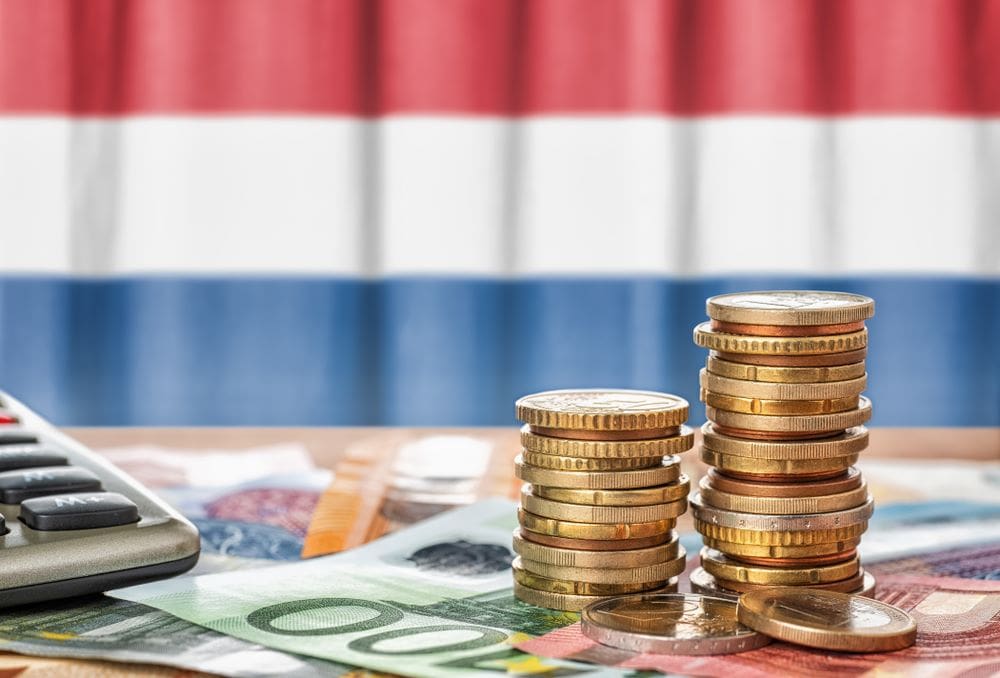
Before anything else, you need to budget the physical logistics of getting there. International moving costs to the Netherlands vary considerably depending on your origin, the volume of belongings, and the services you choose. The Netherlands benefits from Rotterdam — one of Europe's busiest ports — and Schiphol Airport, keeping port handling fees competitive by European standards.
Cost Breakdown by Origin Region
| Origin Country/Region | Estimated Cost Range | Typical Volume | Transit Time |
|---|---|---|---|
| Germany / Belgium | €800 – €2,500 | 1–2 CBM | 1–3 days |
| United Kingdom | €1,200 – €3,500 | 1–3 CBM | 2–5 days |
| France / Spain | €1,500 – €4,000 | 2–4 CBM | 3–7 days |
| USA (East Coast) | €3,500 – €7,500 | 2–4 CBM | 3–5 weeks |
What Your Moving Quote Should Include
When comparing international moving companies for a Netherlands relocation, verify whether the quote includes:
- Door-to-door service: Collection at your origin address and delivery to your Dutch address — the most convenient and recommended option
- Customs clearance: Essential for non-EU shipments. Rotterdam is a major customs hub and professional movers handle Dutch customs documentation. Budget €150–€400 for non-EU shipments
- Transit insurance: Standard coverage (€100–€300) covers loss or damage. Comprehensive all-risk coverage is recommended for valuable items
- Packing service: Professional packing adds €200–€800 but significantly reduces damage risk for fragile or valuable items
- Temporary storage: If you're arriving before your housing is ready, storage at Rotterdam or Amsterdam warehouses runs €80–€200 per month
Dutch Customs: Key Points for Non-EU Movers
- Transfer of Residence (ToR) relief: EU regulations allow duty-free import of household goods if you've lived outside the EU for at least 12 months and are establishing primary Dutch residency. Your moving company's customs agent handles this
- Prohibited items: Fresh food, certain plant products, and items infringing EU regulations cannot be imported without specific permits
- Vehicle import: Importing a personal car requires RDW registration and BPM (registration tax) payment, which can be €3,000–€10,000+ depending on emissions
- Customs clearance timing: Netherlands customs for household goods typically clears in 2–5 working days with complete documentation
Visa & Residence Permits: Every Route Explained
Dutch immigration is administered by the IND (Immigratie- en Naturalisatiedienst — the Immigration and Naturalisation Service). The path you take depends entirely on your nationality, reason for moving, and employment situation. Here is a comprehensive breakdown for every common profile.
EU / EEA / Swiss Citizens: Freedom of Movement
EU and EEA passport holders and Swiss citizens have the right to live and work in the Netherlands without a visa or residence permit. You simply need to:
- Register with your local gemeente (municipality) within 5 days of establishing residency — this automatically generates your BSN number
- After 5 years of continuous legal residence, apply for a permanent residence permit
- After 5 years, EU citizens can apply for Dutch citizenship subject to other requirements including language tests
Non-EU Citizens: Permit Overview
| Permit Type | Applied for | Key Requirements | Duration | More info |
|---|---|---|---|---|
| Highly Skilled Migrant (HSM) | Professionals employed by IND-recognised sponsors | Min. €5,008/month gross (under 30: €3,672/month) | 1–3 years, renewable | https://business.gov.nl/coming-to-the-netherlands/permits-and-visa/residence-permit-for-highly-skilled-migrant/ |
| European Blue Card | Non-EU graduates in skilled roles | Min. €5,670/month gross (2026) | 1–4 years, renewable | https://ind.nl/en/residence-permits/work/european-blue-card-residence-permit |
| Dutch-American Friendship Treaty (DAFT) | US citizens starting a Dutch business | Min. €4,500 investment + KVK registration | 2 years, renewable | https://expatlaw.nl/dutch-american-friendship-treaty |
| Orientation Year Visa (Zoekjaar) | Recent graduates of Dutch/top global universities | Degree within last 3 years | 1 year, non-renewable | https://business.gov.nl/coming-to-the-netherlands/permits-and-visa/residence-permit-for-orientation-year/ |
| Student Residence Permit (TEV/MVV) | Non-EU students at Dutch institutions | Non-EU students at Dutch institutions | Duration of study (etc. 3 years or 4 years Bachelor or 1-2 years Masters/PHD depends on school) | https://ind.nl/en/residence-permits/study/student-residence-permit-for-university-or-higher-professional-education |
| Family Reunification | Partners and children of Dutch residents | Sponsor earns ≥ social minimum wage (100%) | 1 year, renewable | https://ind.nl/en/about-us/background-articles/family-reunification |
| Self-Employed / Entrepreneur | Independent workers and business founders | Points-based business assessment by RVO | 1–2 years | https://business.gov.nl/regulations/work-permit-self-employed-professionals/ |
Highly Skilled Migrant (HSM) — The Most Common Route
The HSM permit is the most used pathway for international professionals relocating to the Netherlands. Key facts:
- Your Dutch employer must be an IND-recognised sponsor — most multinationals, universities, and research institutions in the Netherlands already hold this status
- Applications are submitted by the employer; average processing time is 2–4 weeks
- The HSM permit makes you eligible for the 30% tax ruling (see Tax section)
- Your partner and dependent children can join you on a dependent residence permit
- After 5 years, you can apply for a permanent residence permit
Source for more info: https://business.gov.nl/coming-to-the-netherlands/permits-and-visa/residence-permit-for-highly-skilled-migrant/
The Dutch-American Friendship Treaty (DAFT)
Unique to US citizens, the DAFT is one of the most accessible self-employment routes in Europe. Under this 1956 treaty, Americans can establish a Dutch business (including as a ZZP freelancer) with modest capital requirements:
- Minimum €4,500 invested in a Dutch business (initial operating capital counts)
- Business must be registered with the KVK (Chamber of Commerce)
- Initial permit: 2 years, renewable to permanent residency
- Popular with American freelancers, remote workers, and digital entrepreneurs
- Apply via the Dutch consulate in your current country before moving
Source for more info: https://expatlaw.nl/dutch-american-friendship-treaty
Student Residence Permit
Non-EU students enrolled at Dutch universities or HBO institutions apply through their institution (which acts as IND sponsor). The process:
- Receive acceptance letter from a Dutch institution
- Institution submits your TEV application to the IND
- Collect your MVV sticker from the Dutch consulate in your home country
- After graduating, apply for the 1-year Orientation Year Visa (Zoekjaar) to find work
Source for more info: https://ind.nl/en/residence-permits/study/student-residence-permit-for-university-or-higher-professional-education
The BSN registration
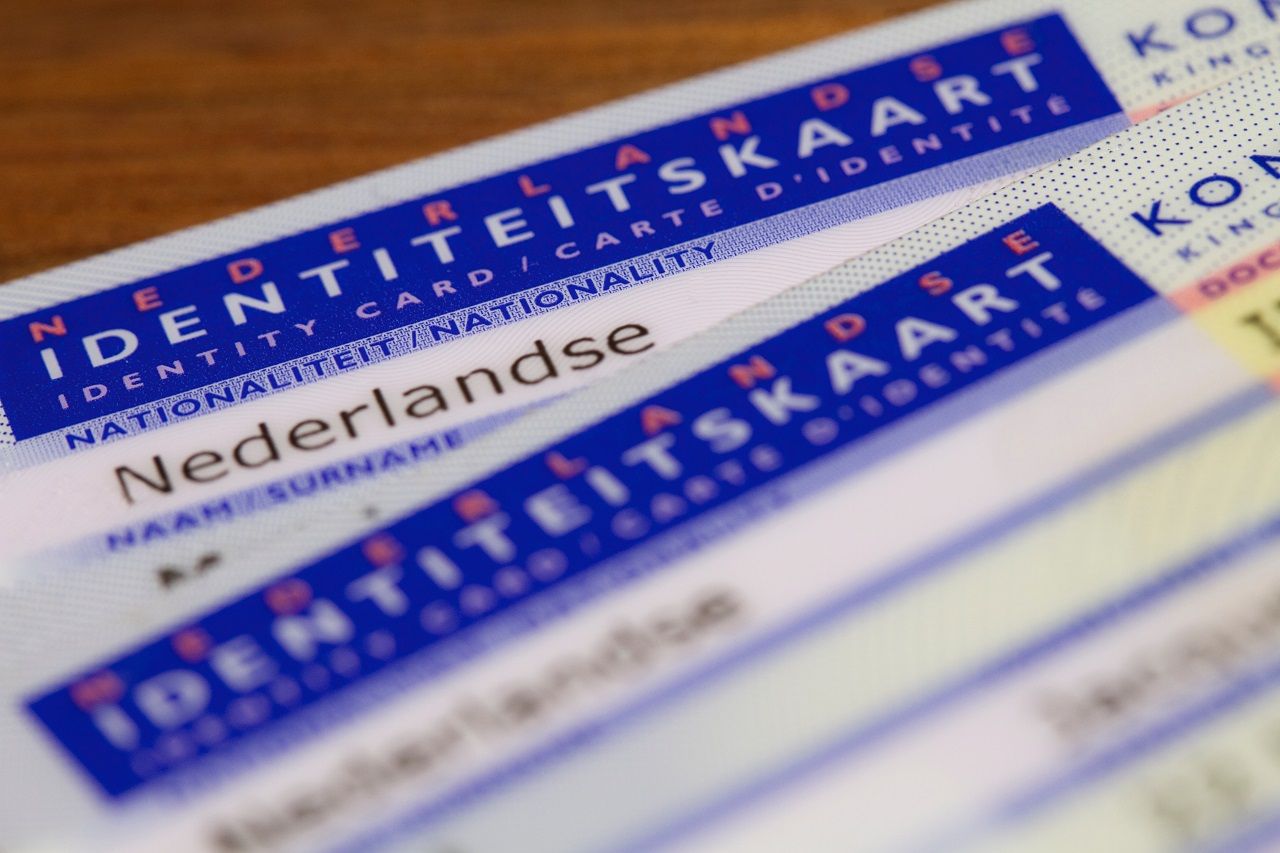
The BSN (BurgerServiceNummer — Citizen Service Number) is the Dutch equivalent of a social security number. It's a unique 8- or 9-digit personal identification number used across every Dutch government system. Without a BSN, you cannot legally work, open a Dutch bank account, access healthcare, pay taxes, or enrol children in school.
Who Needs a BSN?
Anyone staying in the Netherlands for more than 4 months who earns income, studies, or accesses public services needs a BSN. Even shorter-term stays for Dutch employment require one.
How to Get Your BSN
Route 1: In-Person Gemeente Registration (Standard)
If you have a fixed Dutch address, register at your local municipality office:
- Book an appointment at your gemeente's website (search "[city name] gemeente inschrijven")
- Bring your valid passport or EU ID card, plus residence permit if applicable (non-EU)
- Bring proof of your Dutch address: signed rental contract, or a written declaration from your host
- Bring marriage certificates and children's birth certificates if registering family members
- Your BSN is issued on the spot or mailed within 1–5 working days
Route 2: RNI Registration (No Fixed Address Yet)
If you haven't yet secured permanent housing, register at one of the 19 designated RNI municipalities — including Amsterdam, Rotterdam, The Hague, Utrecht, and Eindhoven. This provides a BSN before you have a fixed address, so you can open a bank account and start work immediately. Update your registration with a permanent address within 5 days of moving in.
What Your BSN Unlocks:
- Open a Dutch bank account (ING, ABN AMRO, Rabobank, Bunq)
- Register with a Dutch GP (huisarts) and access the national health system
- Take out mandatory health insurance (zorgverzekering)
- File Dutch income tax returns via the Belastingdienst
- Apply for the 30% tax ruling through your employer
- Enrol children in school and register for DigiD (Dutch digital identity)
- Claim government allowances: zorgtoeslag, huurtoeslag, kinderopvangtoeslag
Finding Housing in the Netherlands
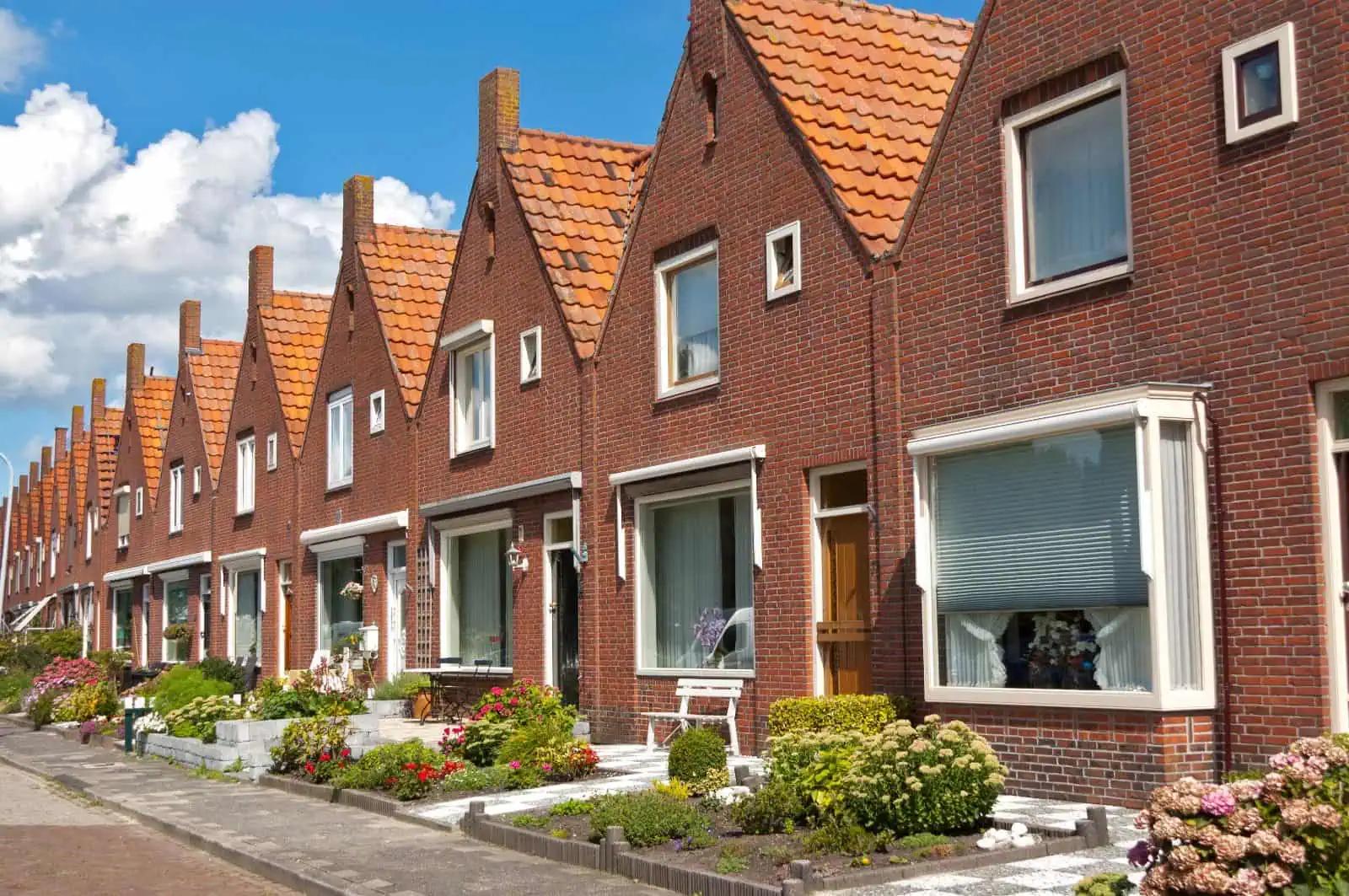
Let's be honest upfront: the Dutch housing market in 2026 is extraordinarily competitive. The Netherlands has a well-documented housing shortage, and cities like Amsterdam, Utrecht, and The Hague regularly attract far more applicants than available properties. Understanding the market structure — and using the right strategy — significantly improves your chances.
The Dutch Rental Market: Two Sectors
- Social housing (sociale huur): Rent-controlled properties managed by housing corporations (woningcorporaties), capped at approximately €879/month. Waiting lists in Amsterdam run 8–15 years. Not accessible to most new arrivals
- Private rental sector (vrije sector): Market-rate rentals, typically starting at €900–€1,000/month for a studio. This is where all expats and international newcomers rent
Average Rents by City (2026)
table
Where to Search for Housing
- Funda.nl: The Netherlands' most comprehensive property portal — both purchase and rental. Set up automatic email alerts immediately
- Pararius.nl: The leading dedicated rental platform; strong private-sector listings across all Dutch cities
- Kamernet.nl: Best for room rentals and shared housing — essential for students and young professionals
- HousingAnywhere.com: International-focused platform popular with students and new arrivals; English-language listings
- Expatica.com housing section: Curated expat-friendly listings with English-speaking landlords
- Facebook Groups: "Amsterdam Housing," "Expats in the Netherlands," and city-specific groups frequently list properties before formal platforms
How to Win in the Dutch Rental Market

🏠 Stand Out as a Rental Applicant
- Prepare a tenant profile letter with your employment contract, last 3 salary slips, and a brief personal introduction — have it ready to send the moment a suitable listing appears
- Respond to listings within hours, not days — popular Amsterdam listings disappear the same day
- Offer 2–3 months deposit upfront if you lack Dutch credit history
- Book a furnished short-term apartment for your first 1–3 months so you can search in person from within the Netherlands
- Consider Rotterdam, Almere, or Haarlem as alternatives — all are 20–35 minutes by train to Amsterdam
- Never transfer money before signing a rental contract and verifying the landlord's identity
Understanding Dutch Rental Contracts

- Fixed-term contract (tijdelijk huurcontract): Maximum 2 years for self-contained housing. Limited tenant protections; landlord can terminate at end of term without cause
- Open-ended contract (onbepaalde tijd): Strong tenant protection. Landlord can only terminate for specific legal reasons
- Always clarify whether rent is all-in (including utilities) or kale huur (excluding utilities). Service costs for communal areas are often charged on top
⚠️ Rental Scam AlertThe Dutch housing market — particularly Amsterdam — has a significant fraud problem targeting international newcomers. Never pay any deposit before signing a contract and physically visiting the property. Listings priced far below market, landlords claiming to be "abroad," or requests for payment via WhatsApp or cryptocurrency are near-certain scams. Use verified platforms and consider checking property ownership via the Kadaster (Dutch land registry).
Healthcare & Insurance in the Netherlands
The Dutch healthcare system is consistently ranked among the best in Europe. It operates as a mandatory private insurance model — every resident must hold basic health insurance (basisverzekering) — but the government standardises coverage, tightly regulates premiums, and subsidises lower-income residents. The quality of care is excellent and specialist waiting times are short by European standards.
Mandatory Basic Health Insurance (Basisverzekering)

All residents must take out Dutch basic health insurance within 4 months of registering. Key details:
- Average basic premium: €130–€160/month (2026), varying by insurer
- All insurers must offer the identical basic package — coverage is standardised by law
- Basic coverage includes: GP visits, specialist referrals, hospitalisation, most prescription medicines, maternity care, and mental health care
- Annual deductible (eigen risico): €385/year (2026) — your out-of-pocket amount before insurance pays. GP visits are exempt
- Major insurers: Zilveren Kruis, VGZ, Menzis, CZ, DSW, ONVZ. Compare at zorgwijzer.nl or independer.nl
Zorgtoeslag: The Healthcare Allowance
If your income is below a threshold (approximately €38,000/year for individuals in 2026), the government subsidises your premium via the zorgtoeslag — up to €123/month directly from the Belastingdienst. Apply via mijn.toeslagen.nl immediately after receiving your BSN. This can reduce your effective monthly health insurance cost to under €30/month for lower-income residents.
Supplementary Insurance (Aanvullende Verzekering)
Most residents add supplementary insurance (€15–€60/month) to cover items outside the basic package: adult dental care (the most popular addition), physiotherapy beyond the basic limit, glasses and contact lenses, and broader mental health coverage.
Registering with a Huisarts (GP)

Your GP (huisarts) is the central figure in Dutch healthcare — the gatekeeper to all specialist care. You cannot see a specialist without a GP referral. To register:
- Search for a GP accepting new patients near your address on zorgkaartnederland.nl
- Contact the practice and request registration — bring your BSN and insurance card
- Register as soon as possible after arrival; popular practices in major cities have waiting lists
Banking & Finance in the Netherlands
Opening a Dutch bank account is one of your first practical priorities after receiving your BSN. Dutch employers pay salaries to Dutch IBANs, and most landlords require direct debit for monthly rent.
Major Dutch Banks
- ING: The largest Dutch retail bank. Straightforward account opening, English-language online banking and app. Basic current account is free or €3.25/month
- ABN AMRO: Second-largest, known for English-language expat support. Monthly fee: €3.90–€5.90
- Rabobank: Cooperative bank with strong regional branches. Fee: approximately €4/month
- Bunq: Dutch fintech bank — arguably the most expat-friendly option. Fully English, no Dutch address required to open, instant activation. Free tier available; premium from €9.99/month. Ideal for the first weeks before your main account is set up
- Revolut / Wise: Useful as a bridge before your Dutch IBAN is ready, especially for international transfers. Not a substitute for a Dutch bank account
What You Need to Open an Account
- Valid passport or EU ID card
- BSN number (mandatory for all traditional Dutch banks)
- Dutch address (Bunq is the main exception if you don't yet have one)
- Sometimes: proof of employment or study enrolment letter
💳 Understanding iDEALiDEAL is the Netherlands' dominant online payment system — used for utility bills, rent, government services, webshops, and most daily transactions. It works directly from your Dutch bank account through your banking app. Once you have a Dutch bank account, iDEAL essentially replaces credit card use for most transactions in the Netherlands.
Taxes & the 30% Ruling
Understanding your Dutch tax position early is essential — particularly the 30% ruling, which can make a significant difference to your financial situation as an international professional.
Dutch Income Tax: The Box System
- Box 1 (work and home): Employment income taxed in two brackets. In 2026: up to €75,518 taxed at 36.97%; above that at 49.5%
- Box 2 (substantial business interest): Dividend income from companies where you hold ≥5% of shares, taxed at 24.5%–33%
- Box 3 (savings and investments): Notional return on net assets above the threshold (~€57,000 for individuals), taxed at 36%
The 30% Ruling: A Major Benefit for Expat Professionals
The 30% ruling (30%-regeling) is the Netherlands' flagship incentive for attracting international talent. If you qualify, 30% of your gross salary is paid tax-free as an allowance covering your "extraterritorial costs" of relocating from abroad.
Eligibility requirements (2026):
- Recruited or transferred from outside the Netherlands
- Must have lived more than 150 km from the Dutch border in the 24 months prior to starting Dutch employment
- Minimum gross salary threshold: €46,107/year (2026; lower threshold for scientific researchers)
- Application must be submitted within 4 months of starting Dutch employment — missing this deadline permanently forfeits the benefit
⚠️ 30% Ruling Changes 2025–2027The Dutch government is restructuring the 30% ruling. New applicants from 2024 onwards receive a declining benefit: 30% in years 1–20 months, 20% for the next 20 months, and 10% for the final 20 months — still totalling 5 years. Applicants who received a 30% ruling grant before January 2024 retain the original full 30% rate for their full 5-year duration. Consult a Dutch expat tax advisor for your specific situation before and immediately after starting employment.
Filing Your Dutch Tax Return
The Dutch tax year runs 1 January–31 December. Returns (aangifte inkomstenbelasting) are filed with the Belastingdienst between 1 March and 1 May each year via the Mijn Belastingdienst online portal. Most employed residents with straightforward income can complete a return in under an hour. Complex situations — self-employment, foreign income, 30% ruling, Box 3 assets — benefit from a Dutch tax advisor. Set up your DigiD (digital identity) at digid.nl as soon as you have your BSN; it's required to access all Belastingdienst services.
Cost of Living in the Netherlands

The Netherlands is a high-income country with a corresponding cost of living — particularly in major cities. Strong wages, the 30% ruling for eligible expats, and generous government allowances (healthcare, rent, childcare subsidies) help offset costs significantly for legal residents.
Monthly Budget Estimate: Single Person
table
Cost-of-Living Highlights
- The bicycle advantage: A second-hand bike costs €50–€200 and eliminates significant daily transport costs. The Netherlands has 35,000+ km of dedicated cycling infrastructure — most Dutch cities are designed around bikes, not cars
- Supermarkets: Albert Heijn is convenient and has the widest reach; Jumbo and Lidl offer 15–30% savings. Most residents shop a mix of both
- Dining: A Dutch lunch (broodje, kroket) costs €5–€9. A mid-range dinner for two is €40–€80. Amsterdam prices run approximately 20–30% higher than Rotterdam or Eindhoven
- Children's allowance (kinderbijslag): All residents with children under 18 receive quarterly payments from the SVB regardless of nationality — claim as soon as you have your BSN
- Childcare subsidy (kinderopvangtoeslag): Working parents with children in registered childcare can receive government contributions covering up to 96% of childcare costs for lower-income households
Dutch Culture, Language & Social Life
Understanding Dutch culture before you arrive significantly reduces culture shock. The Dutch have a distinctive national character that surprises many newcomers — and once you understand it, it becomes one of the country's most endearing qualities.
Dutch Directness: Honesty, Not Rudeness

The Dutch are famously direct in communication. Where an English speaker might say "that's an interesting perspective" to politely signal disagreement, a Dutch colleague will simply say "ik ben het daar niet mee eens" — I disagree with that. This is not rude; it is considered honest and respectful. Indirect communication or excessive diplomatic hedging can frustrate Dutch colleagues who interpret it as evasiveness.
Practical implication: do not be offended if a Dutch colleague challenges your idea in a meeting or a new friend comments frankly about something. They are treating you as an equal worthy of honest engagement, not being unkind.
Gezelligheid: The Dutch Art of Togetherness
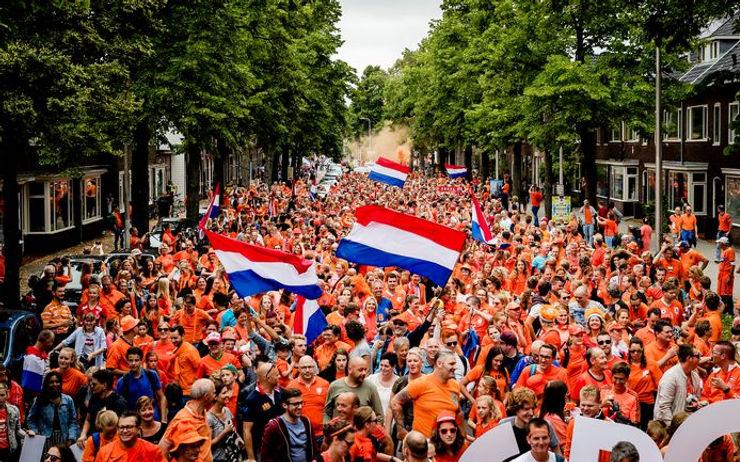
The Dutch word gezelligheid (roughly: cosiness, conviviality, the warmth of togetherness) is central to Dutch social life. It describes the feeling of shared time well spent — whether in a brown café (bruine kroeg), at a birthday gathering, or around a dinner table. Unlike Danish hygge which focuses on physical comfort, gezelligheid is more about the quality of human connection and shared atmosphere.
Work-Life Balance: The Dutch Model

The Netherlands has one of the world's highest rates of part-time work and among the lowest average working hours per employee in the developed world. A 32-hour, 4-day workweek is completely normal. Staying late to demonstrate dedication is not respected — results are what count. The Dutch strongly guard personal time, and it is both culturally acceptable and common to decline after-hours work contact unless urgent.
Cycling Culture
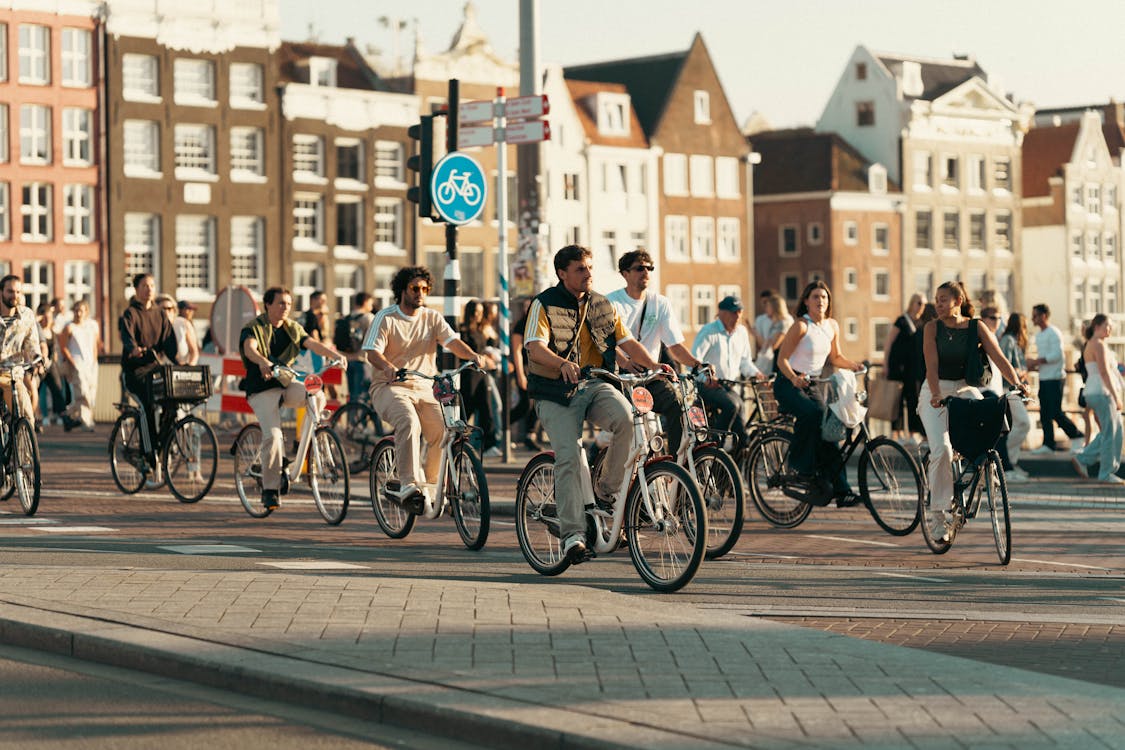
It cannot be overstated: the bicycle is not just transport in the Netherlands — it is a cultural institution. There are more bicycles than people (23+ million bikes for 17 million people). Cycling is used for commuting, school runs, grocery shopping, and nights out. As a newcomer, acquiring a bike and learning Dutch cycling etiquette (hand signals, right-of-way, bell use, giving way to cyclists from the right) should be among your first priorities. Using a car in Dutch city centres is actively discouraged by urban design — parking is expensive and deliberately scarce.
The Dutch Language
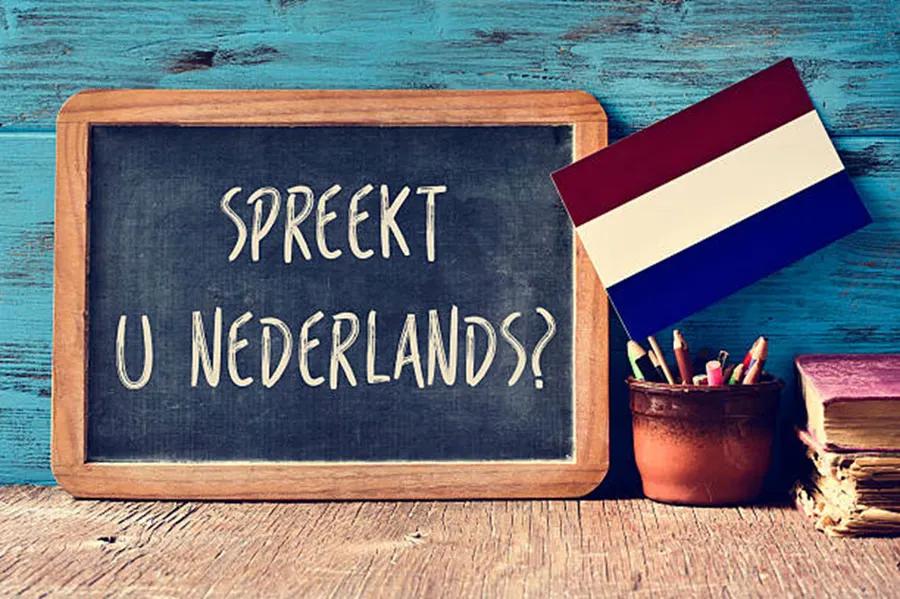
Dutch (Nederlands) is spoken by approximately 24 million people worldwide. English proficiency in the Netherlands is exceptionally high — the country consistently ranks first or second globally — and most international companies operate in English. However, learning Dutch is strongly advisable for integration, career advancement outside international companies, understanding official correspondence, and building genuine friendships beyond the expat bubble.
Approximate Learning Timeline
- A1–A2 (basic): 80–120 hours. Basic daily transactions, reading simple signs and menus
- B1 (conversational): 300–400 hours total. Most daily conversations, understanding official letters
- B2 (professional): 600–800 hours. Dutch-language professional roles, full social integration
Dutch Language Resources
- NT2 courses: Government-recognised integration language courses, often subsidised via the DUO system — ask your gemeente about local options
- Regina Coeli: Premium intensive Dutch courses, highly regarded by expat professionals
- Babel / Language Trainers: Private and corporate Dutch lessons
- Duolingo / Babbel: Good for initial vocabulary building, insufficient alone for conversational fluency
Key Cultural Dos and Don'ts
tab;e
The Dutch Job Market

The Netherlands is home to some of the world's most prestigious multinationals — Shell, Philips, ASML, Unilever, ING, Heineken, NXP, KPMG, and many others — alongside a thriving startup ecosystem. The economy consistently records one of the EU's lowest unemployment rates (approximately 3–4%).
Key Sectors for International Professionals
- Technology & Semiconductors: Eindhoven is home to ASML (world's only EUV lithography machine maker), Philips, and NXP — among the world's most important tech companies. Amsterdam has Booking.com, TomTom, Adyen, and a fast-growing startup ecosystem
- Finance & FinTech: Amsterdam became Europe's leading financial hub post-Brexit. ABN AMRO, ING, Rabobank, Adyen, and dozens of international banks have major operations here
- Life Sciences & Pharma: Leiden (pharma cluster), Amsterdam, and Utrecht host Johnson & Johnson, AstraZeneca, and hundreds of biotech and medical device companies
- Logistics & Supply Chain: Rotterdam Port is Europe's largest. Maersk, DSV, DB Schenker, and Amazon all have significant Dutch distribution hubs
- International Organisations: The Hague hosts the International Court of Justice, OPCW, Europol, Eurojust, and dozens of international organisations — a significant source of international professional employment
- Agriculture & Food Tech: Wageningen University's ecosystem has made the Netherlands the world's second-largest agricultural exporter
Finding a Job in the Netherlands
- LinkedIn: The primary professional network and job search platform in the Netherlands. Dutch recruiters are extremely active here
- Indeed.nl / Nationale Vacaturebank: Broad Dutch job boards for all sectors
- Glassdoor.nl: Company reviews and salary benchmarking
- Recruitment agencies: Randstad, Adecco, ManpowerGroup, Michael Page, and Hays all have extensive Dutch operations
- Direct company applications: Many Dutch employers advertise exclusively on their own career pages — set up job alerts at your target companies
Dutch Labour Law: Key Employee Rights
- Minimum wage: €13.68/hour for adults (2026) — one of Europe's highest
- Annual leave: Minimum 20 days paid leave for full-time workers, plus 8–11 public holidays. Most employers offer 25–28 days
- Vakantiegeld (holiday pay): A uniquely Dutch benefit — 8% of annual gross salary paid as a lump sum in May each year, effectively a mandatory 13th-month bonus
- WW (unemployment benefit): Up to 70% of last salary for a maximum of 24 months for eligible residents
- Part-time rights: Dutch employees have a legal right to request part-time hours, and employers must accommodate this unless there is serious business reason not to
Freelancing (ZZP) in the Netherlands
The Netherlands has one of Europe's largest freelance economies with 1.1+ million self-employed workers (ZZP-ers). To freelance legally:
- Register with the KVK (Kamer van Koophandel — Dutch Chamber of Commerce): one-time fee of €75
- Receive your KVK number and BTW (VAT) number
- Charge BTW at 21% on invoices and remit quarterly to the Belastingdienst
- Pay Box 1 income tax on net business profits; handle your own pension, healthcare, and income protection
Education & Childcare for Children
If you're relocating with children, education will be one of your most important decisions. The Netherlands has a well-funded, high-quality public education system and a significant number of international schools catering to its large expat community — particularly around Amsterdam, The Hague, Eindhoven, and Rotterdam.
Compulsory Education
Education is compulsory in the Netherlands from age 5 (though most children start at 4). Full compulsory attendance applies from age 5 to 16; partial attendance (at least 2 days/week in school or training) continues until age 18.
The Dutch School System
tbale
Dutch Public Schools
- Free — no tuition fees — high quality, government-funded
- Instruction entirely in Dutch — initially challenging for non-Dutch speaking children
- Many primary schools offer a "nieuwkomersklas" (newcomer class) or international transition class for non-Dutch speakers
- Children typically integrate into mainstream Dutch classes within 1–2 years
- Recommended for families planning to stay 3+ years for best long-term integration
International Schools
- Teach in English (or other languages) using IB, British, American, or other national curricula
- Fees: €12,000–€28,000/year for primary; €18,000–€35,000/year for secondary
- Many corporate relocation packages include international school fee reimbursement — always ask your employer
- Best for families on short-term assignments (1–3 years) or those who need curriculum continuity
Notable International Schools in the Netherlands
- Amsterdam International Community School (AICS): Amsterdam; IB Primary and Middle Years Programme
- The British School in the Netherlands (BSN): The Hague / Leidschenveen; one of Europe's largest British schools
- American School of The Hague (ASH): Wassenaar; American curriculum, PreK–12
- International School Eindhoven (ISE): Eindhoven; IB curriculum; strong reputation with ASML and Philips families
- Rotterdam International Secondary School (RISS): Rotterdam; IB curriculum
Childcare (Kinderopvang)
- Kinderdagverblijf (KDV): Nursery/daycare for ages 0–4. Full-time costs: €1,500–€2,500/month before subsidy. Kinderopvangtoeslag can cover up to 96% for lower-income working parents
- Peuteropvang: Part-time preschool for ages 2–4, typically 2–4 mornings/week. Subsidised or free for many families
- Buitenschoolse opvang (BSO): After-school care for primary-age children (4–12), typically 3pm–6pm. Also eligible for kinderopvangtoeslag
👶 Apply for Kinderopvangtoeslag ImmediatelyThe kinderopvangtoeslag (childcare allowance) is one of the Netherlands' most valuable benefits for working parents. Apply via the Belastingdienst as soon as you have your BSN and signed childcare contract. The subsidy is paid monthly and can reduce your childcare bill by 50–96% depending on your income. Subsidies are not backdated beyond 3 months — do not delay.
Enrolling Your Child in School
- Contact schools early — popular schools have waiting lists
- Bring your child's BSN, birth certificate, and previous school records (translated if needed)
- Dutch schools follow a September–June academic year with a 6-week summer holiday
- For international schools, applications typically open 6–12 months before the following September intake
- Contact your gemeente's Leerplichtambtenaar (school attendance officer) to confirm compliance with compulsory education requirements
Complete Moving Checklist for the Netherlands
Use this phase-by-phase checklist to stay organised throughout your relocation. Print it, share it with your partner, and tick off items as you go.
Planning & Preparation (3–6 Months Before Move)
- 3–6 Months Before
- Research your visa / residence permit route
- If non-EU: contact Dutch consulate or IND-recognised employer to start permit process
- Research Dutch cities based on work location, schools, and budget
- Set up property alerts on Funda.nl and Pararius.nl
- Book temporary furnished accommodation for first 1–3 months
- Get at least 3 international moving quotes via ReloAdvisor
- Apostille and translate key documents (birth certs, marriage cert, diplomas)
- Check pet import rules (microchip, EU health certificate, rabies vaccination)
- Research and apply to international schools if needed
- Notify current bank, employer, and tax authority of upcoming move
Frequently Asked Questions
How much does it cost to move internationally to the Netherlands?
Moving costs depend on origin and volume.
From within Europe: €800–€4,000.
From the USA: €3,500–€9,000.
From Asia or Australia: €3,000–€11,000.
Prices can vary by 30–40% between companies for the same route — always compare at least 3 quotes from verified international movers.
ReloAdvisor's free quote comparison tool here connects you with vetted movers specialising in Netherlands relocations, including a volume estimator for accurate cost calculation.
Do EU citizens need a visa to move to the Netherlands?
No. EU, EEA, and Swiss citizens have the right of freedom of movement and can live and work in the Netherlands without a visa or residence permit. You must register with your local gemeente within 5 days of establishing residency to receive your BSN number. After 5 continuous years of legal residence, you can apply for permanent residency.
What is the BSN and how do I get one?
The BSN (BurgerServiceNummer) is your Dutch citizen service number — a unique ID linked to your identity across all Dutch government systems. You need it to work, bank, access healthcare, pay taxes, and enrol children in school. You receive it automatically when you register at your local gemeente office. Bring your passport, proof of Dutch address, and residence permit if applicable. If you don't have a permanent address yet, register at one of the 19 RNI municipalities to get your BSN first.
How competitive is the Dutch housing market and what should I do?
The Dutch private rental market is extremely competitive, particularly in Amsterdam, Utrecht, and The Hague.
Listings receive dozens of applications within hours.
Best strategies: prepare a complete tenant profile document in advance (employment contract, salary slips, cover letter), respond to listings within hours, book furnished temporary housing for your first 1–2 months so you can search in person, and consider Rotterdam, Almere, or Haarlem as alternatives to Amsterdam — all are 20–35 minutes by train.
Never pay any deposit without a signed contract and verified landlord identity.
Is health insurance mandatory and what does it cost?
Yes. All Dutch residents must take out basic health insurance (basisverzekering) within 4 months of registering.
Basic premiums are approximately €130–€160/month in 2026. The annual deductible is €385 (GP visits are exempt).
Lower-income residents can apply for the zorgtoeslag allowance, up to €123/month from the government - which can reduce your effective premium to under €30/month. Apply via mijn.toeslagen.nl as soon as you have your BSN.
What is the 30% ruling and do I qualify?
The 30% ruling (30%-regeling) allows eligible expat employees to receive 30% of their gross salary tax-free for up to 5 years. To qualify: you must have been recruited from outside the Netherlands, must have lived more than 150 km from the Dutch border in the 24 months before starting your Dutch job, and must earn above the salary threshold (approximately €46,107 gross/year in 2026). Your employer submits the application — this must happen within 4 months of your start date or the benefit is permanently forfeited. Note: the ruling is being restructured for new applicants from 2024 onwards with a declining benefit schedule. Consult a Dutch expat tax advisor.
Should I put my children in a Dutch school or an international school?
It depends on your length of stay and circumstances. Dutch public schools are free, high quality, and integrate children into Dutch society — but instruction is in Dutch, which takes time to acquire. Most schools offer newcomer transition classes. International schools use English-language curricula (IB, British, American) and provide curriculum continuity, but cost €12,000–€35,000/year. For stays of 3+ years, many expat families find that Dutch public school — with initial language support — provides better long-term integration. Children typically reach conversational Dutch within 6–18 months of starting school.
Do I need to speak Dutch to live in the Netherlands?
Not immediately. English is spoken to an exceptionally high standard — the Netherlands consistently ranks very high globally in English proficiency — and most international companies operate entirely in English.
However, Dutch is still important for daily life outside international bubbles, understanding official government letters, the healthcare system, building genuine Dutch friendships, and career advancement in Dutch-language sectors. Most expats recommend starting Dutch lessons within the first 3 months. The government offers subsidised NT2 integration courses — ask your gemeente.
Ready to Start Your Dutch Adventure?
Get personalised moving quotes and connect with relocation experts who specialise in moves to the Netherlands — from any country in the world.
Compare Free Moving QuotesThe ReloAdvisor Team has helped thousands of expats, students, families, and professionals successfully relocate to the Netherlands and across Europe. This guide reflects current 2026 regulations, real expat experiences, and our professional relocation expertise. Information is updated regularly — last reviewed June 2026.